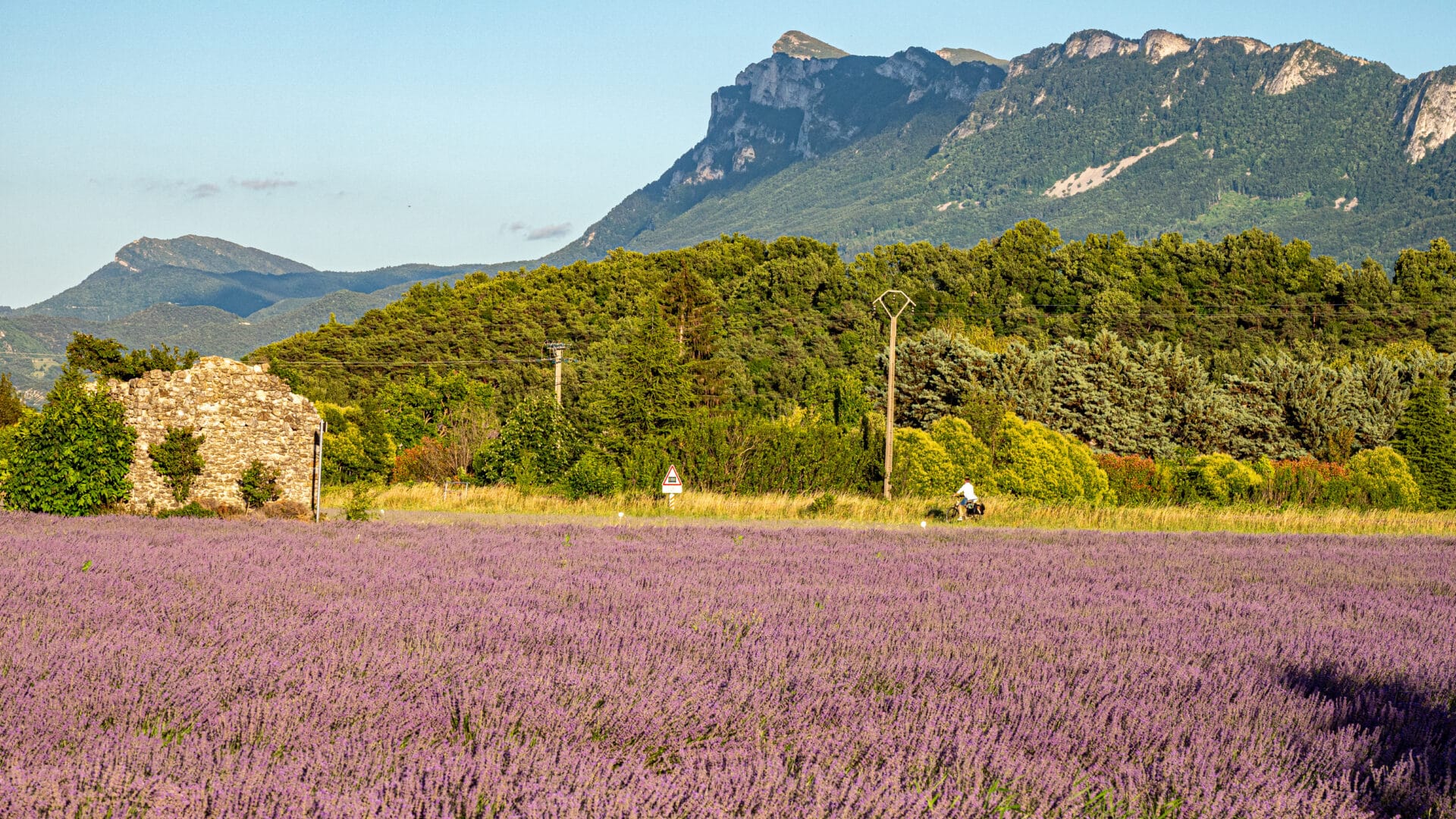

Between Vercors and Provence: the lavender routes around Gervanne Camping
There are places where you can gently sense Provence coming into view.
Around the Drôme Valley, nestled between the Vercors mountains, the hilltop villages, and the first sun-drenched hills, the lavender fields are gradually beginning to add color to the landscape.
At this time of year, the days take on a different rhythm: the roads become more picturesque, the air is fragrant, and the rivers are still refreshingly cool.
From Gervanne Camping, there are several routes that allow you to explore these landscapes, nestled between the mountains and Provence.
The Lavender Routes: A Journey Through the Drôme
The Lavender Routes wind through much of the Drôme region, from the Diois to the Baronnies Provençales. They follow small roads lined with fragrant fields, charming villages, mountain passes, the cliffs of the Vercors, and wild rivers.
From Crest or the Gervanne Valley, it’s easy to reach the landscapes of the Diois region, around Die and Chamaloc, where lavender cultivation has been a part of the local landscape for generations.
Along the roads, you’ll find:
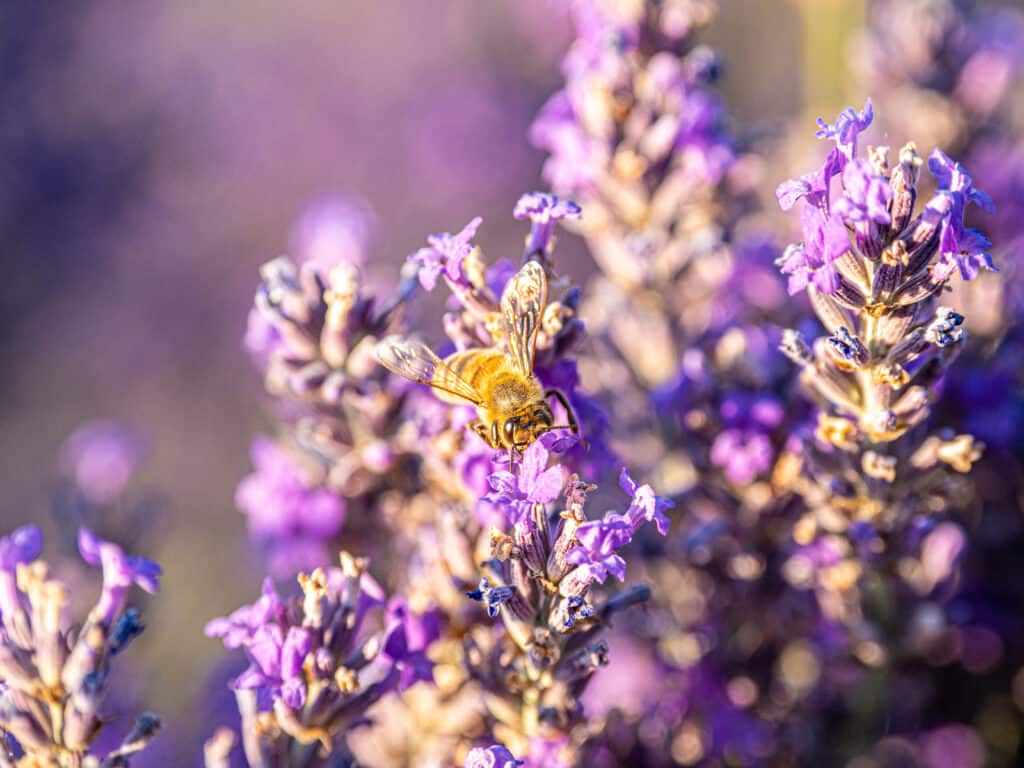
- fields of lavender and lavandin
- artisanal distilleries
- summer markets
- hilltop villages
- landscapes that constantly change between the Alps and Provence
Here, lavender isn’t just a postcard image—it’s a living tradition.
When does lavender bloom in the Drôme?
Flowering depends on elevation and spring temperatures.
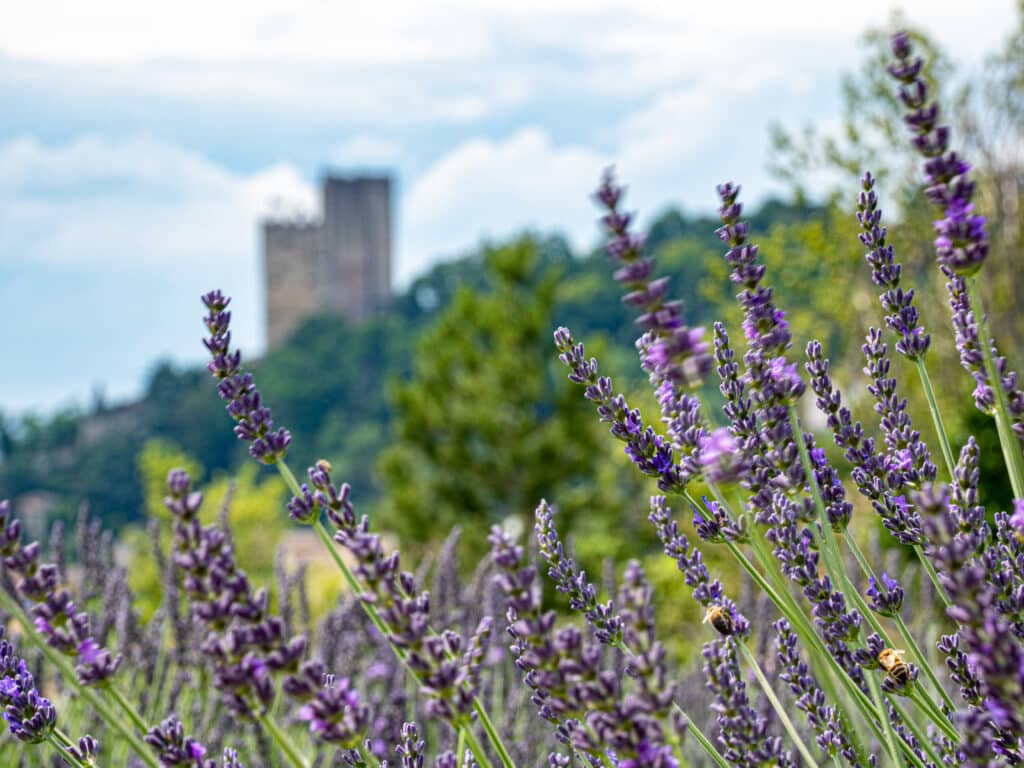
In the lower reaches of the Drôme Provençale, the first blooms often appear as early as mid-June. In the Diois region and areas near the Vercors, they sometimes last until early August.
Lavandin usually blooms before true lavender:
- lavender: mid-June → mid-July
- True lavender: July → early August
Early morning and late afternoon are still the best times to enjoy the scenery and the light.
Chamaloc and the Distillerie des 4 Vallées
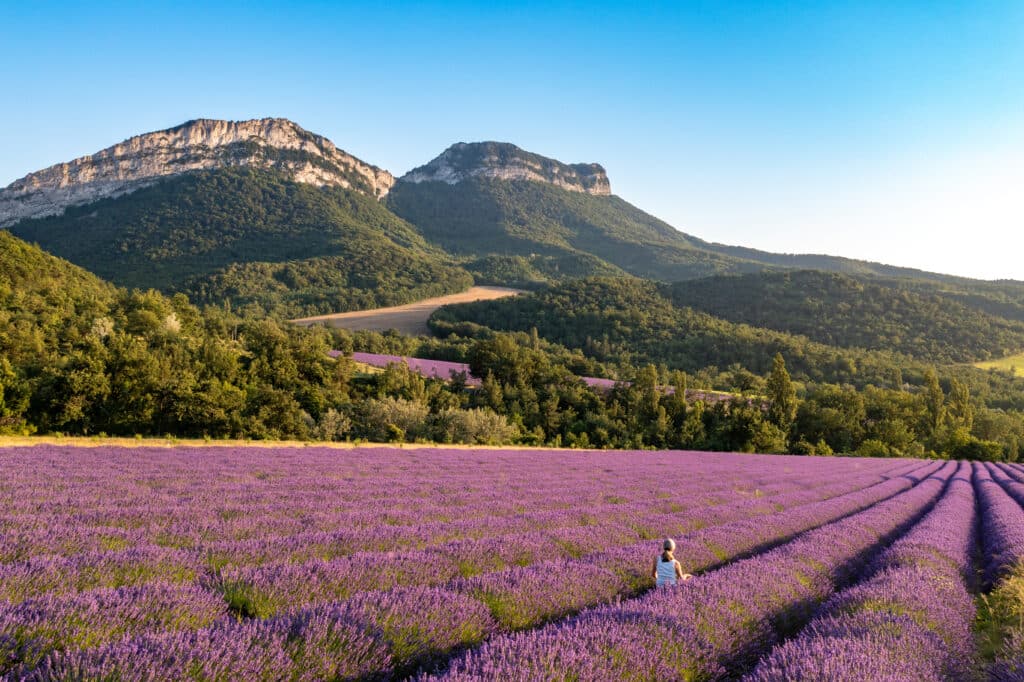
Just a few miles from Die, the village of Chamaloc is one of the iconic stops along the Lavender Route.
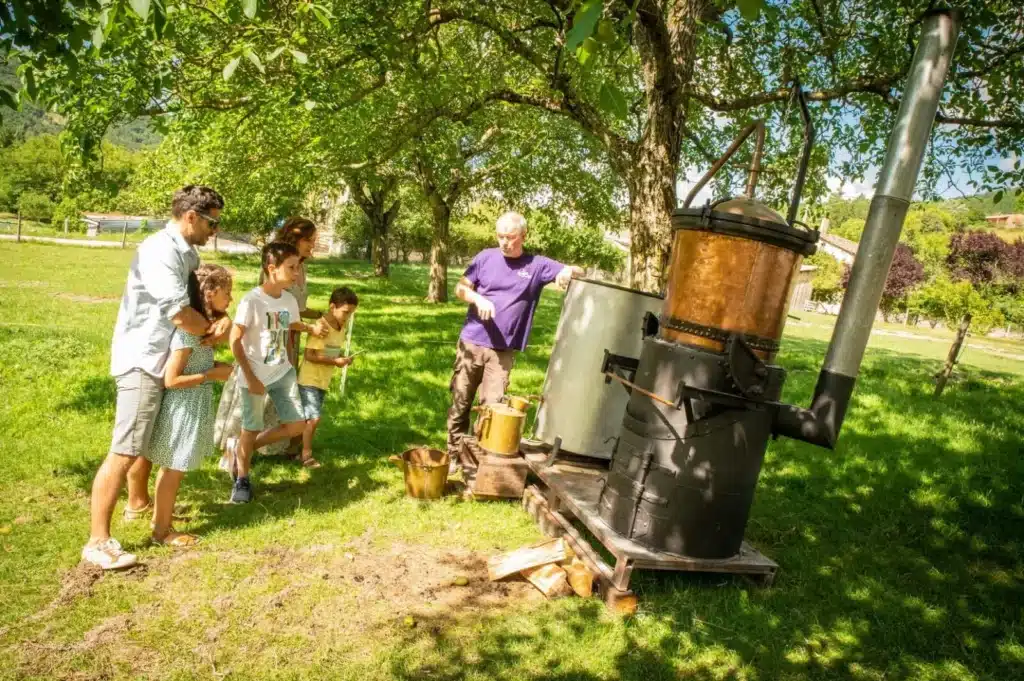
Located at the foot of the Vercors, the Distillerie des 4 Vallées has been cultivating and distilling lavender and lavandin since 1930.
We discover :
- the different varieties of lavender
- distillation methods
- essential oils
- the history of this crop in the Diois region
Distillation is always done using steam, a traditional method used to extract essential oils from freshly harvested flowers.
These visits also help visitors better understand the difference between:
- true lavender
- lavender
- spike lavender
Three closely related plants with very different scents, uses, and cultivation methods.
Between the coolness of the rivers and the Provençal light
It is undoubtedly this contrast that makes this region so special in the summer.
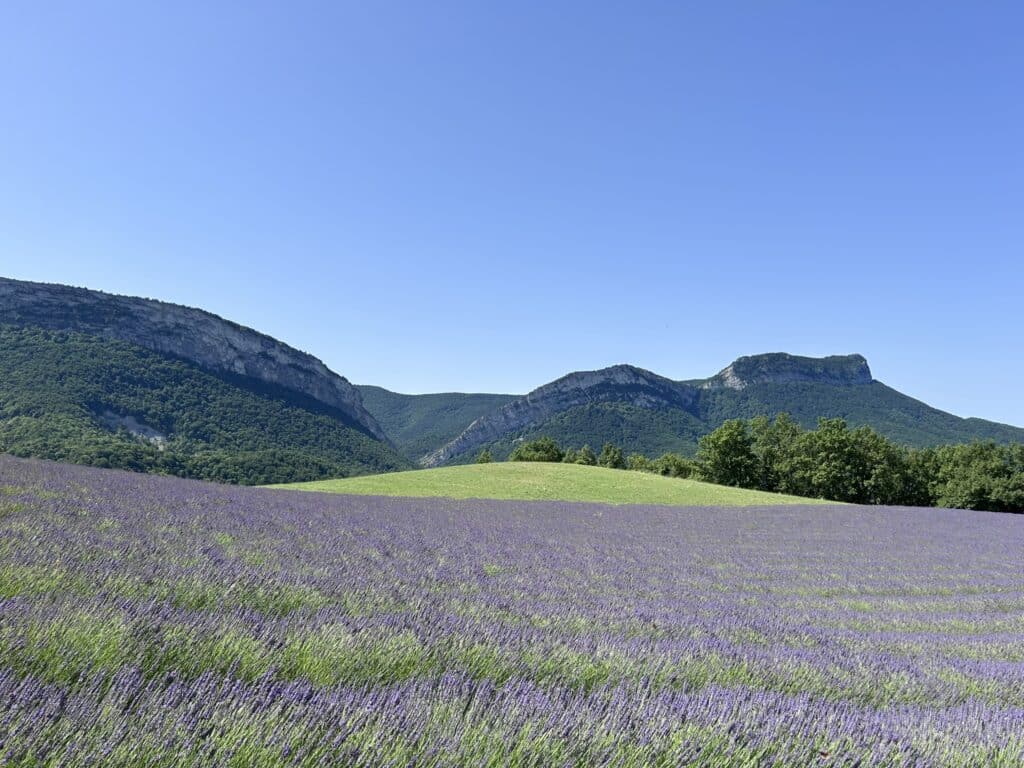
As the day goes on, the landscape begins to take on a Provençal feel: fields of lavender, the crisp light on the hills, and the scent of aromatic herbs.
And then there are the rivers.
The Drôme and Gervanne rivers stay cool even on hot days. After a drive along the lavender-lined roads, many vacationers come back simply to enjoy the water, the pebbles, and the shade of the campground’s tall trees.
Between Vercors and Provence, summer here remains more vibrant, more natural, and more refreshing.
Another way to explore the Drôme
Lavender season is also a time to slow down.
Let’s take our time:
- to pass through a hilltop village
- to settle on a market
- to leave early by bike
- to visit a distillery
- or simply watch the colors change on the mountains as the day comes to a close
The Drôme Valley has a unique atmosphere where the Alps meet Provence.
A land of rivers, light, and fragrances.
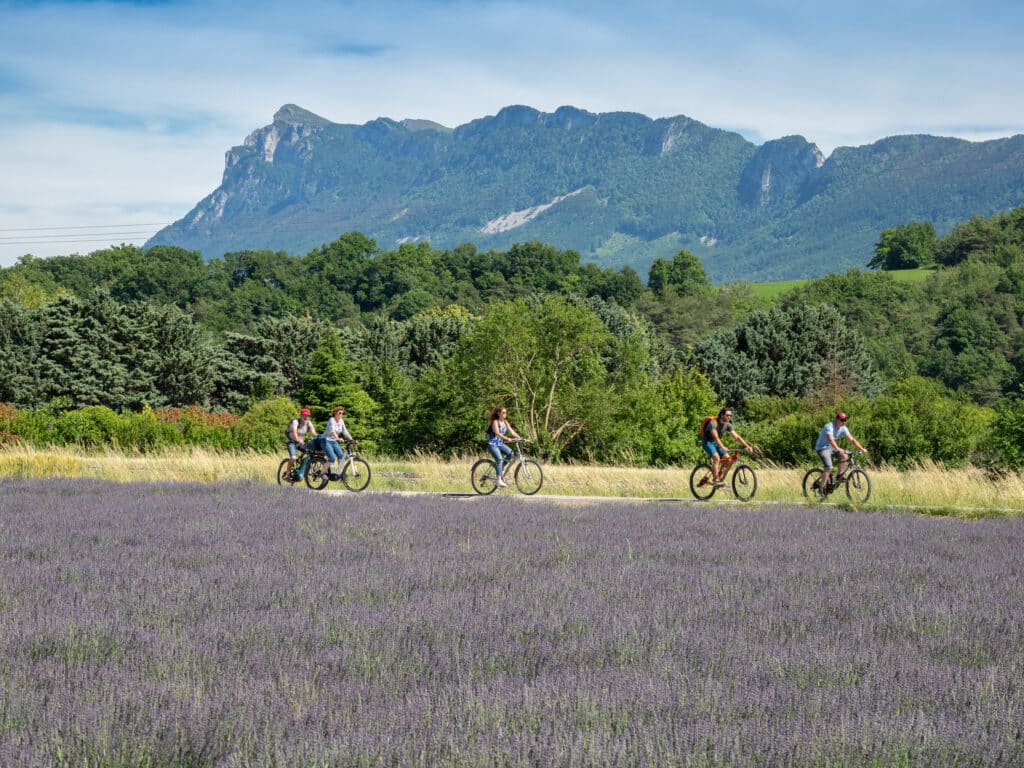
At this time of year, the landscapes are slowly changing color.
Between the cool rivers, the Vercors mountains, and the first glimpses of Provence, the lavender routes offer a different way to explore the Drôme.
A simple, luminous, and deeply vibrant experience.