
Why shouldn’t dams be built on the Drôme and the Gervanne?
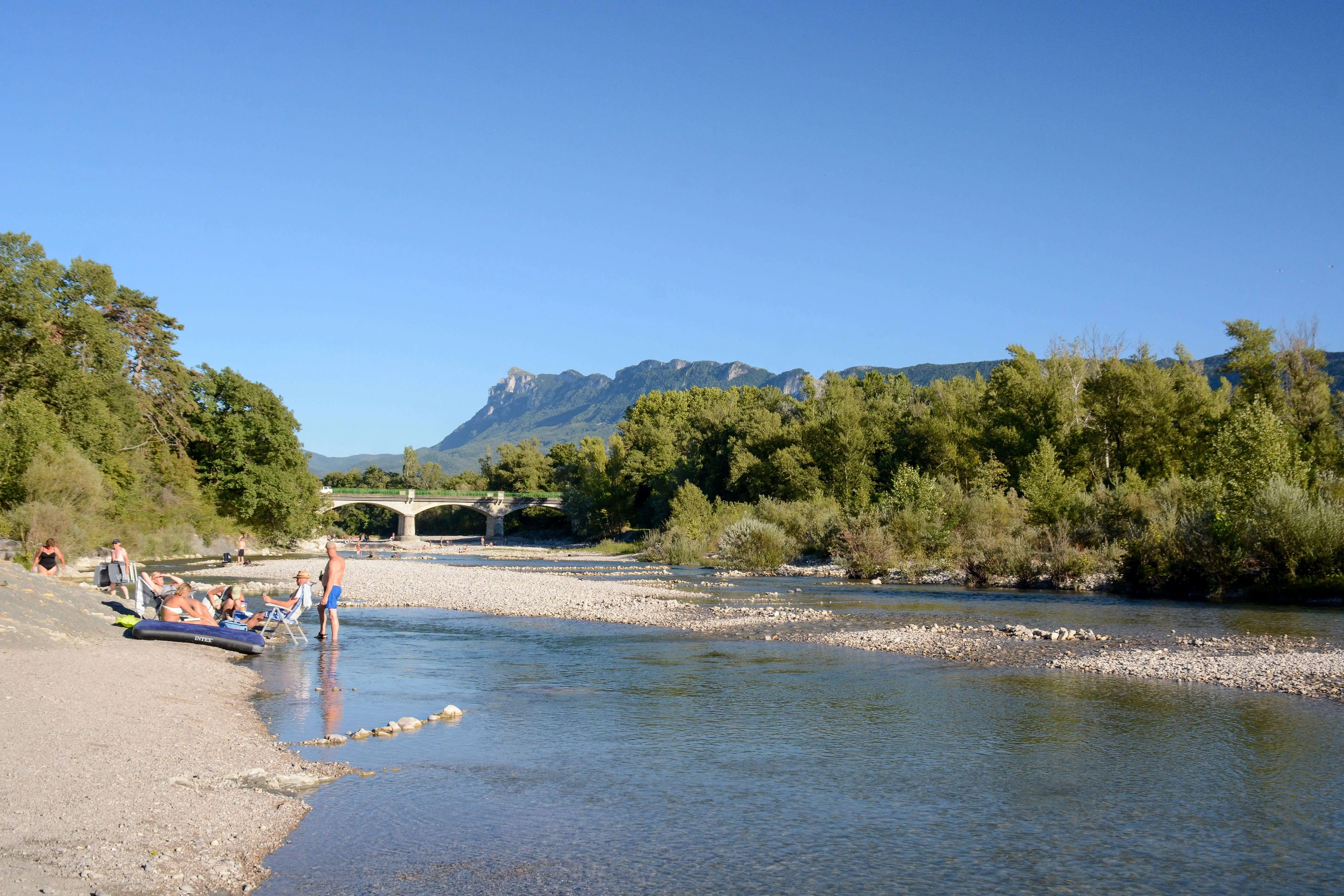
When it’s hot, what could be better than heading down to the banks of the Drôme or the Gervanne, dipping your feet in the water, and enjoying the river?
And when you’re faced with water and hundreds of pebbles, one activity comes to mind quite naturally: building a small dam.
A few stacked rocks, a dam, a new path for the current… It’s fun, especially with the kids, and it seems completely harmless.
Yet, beneath the surface, the river is much more alive than it appears.
A pebble isn’t always “just a rock”
A whole little world lies hidden beneath and among the pebbles.
Many small aquatic organisms use these areas to live, seek shelter, or grow. Fish, too, depend on the diversity of the river’s bottom and currents.
So when we move a lot of rocks to build a dam, we’re not just changing the scenery— we’re altering a small part of their habitat.
That’s why we like to explain a very simple rule to children:
This pebble might already be someone’s home!
Can a small dam really make a difference?
A hand-built dam may seem tiny compared to the Drôme or the Gervanne.
But it can alter water flow locally: in some areas, the flow slows down, the current shifts, and the habitats among the pebbles may be disrupted.
A single dam is obviously not the same as a large-scale structure. But in the summer, when many people visit the river every day and repeat the same actions, even small-scale developments can quickly multiply.
At Gervanne Camping, we sometimes come across several of them in a single morning.
So rather than trying to alter the river, it’s best to simply enjoy the course it has carved out for itself.
You can play IN the river without playing WITH the river
And don’t worry: that definitely doesn’t mean you have to just stand on the bank and watch the water without touching it! 😄
On the contrary!
Go for a swim, dip your feet in the water, watch the fish, look for little creatures, look underwater with a mask, explore with the kids…
In short: Enjoy the river!
We simply ask everyone to avoid building dams and moving the pebbles unnecessarily.
What if I find a dam that’s already been built?
Well, here’s a little exception: you have our permission to go into demolition mode!
An existing blockage can be gently removed to allow the water to flow again.
Obviously, the idea isn’t to turn over the entire riverbed: we simply and carefully remove the stones that have piled up to form the dam, without digging, and while being mindful of any living creatures that might be among the pebbles.
And, of course, always be mindful of your own safety and the current.
Discover the Drôme to Better Protect It
We are especially lucky at Gervanne Camping: two rivers meet at the foot of the campground— the Drôme and the Gervanne.
Rather than simply putting up more “No …” signs, we also prefer to give people the opportunity to understand their surroundings.
That’s why, during the summer, we offer activities led by nature guides: exploring the Drôme, learning about its inhabitants, observing biodiversity, and learning about how the river works.
Because once you start looking at what’s really going on beneath the surface, a pebble isn’t quite just a pebble anymore.
You, too, can become a Guardian of Gervanne
Taking care of our rivers doesn’t necessarily require big gestures.
Don’t build dams, leave the pebbles where they are as much as possible, don’t leave anything on the riverbanks, observe the animals without disturbing them, and teach these simple habits to your children…
Small actions like these—when multiplied by all those who visit the Drôme and the Gervanne during the summer—can make a real difference.
So during your vacation, make the most of it—explore, observe, go swimming…
But let the river remain a river.